Should
Schools Teach the Moral Law to Children?
(If
So, When and How?)
Recently some
Christians have been asked to support proposals that would require school
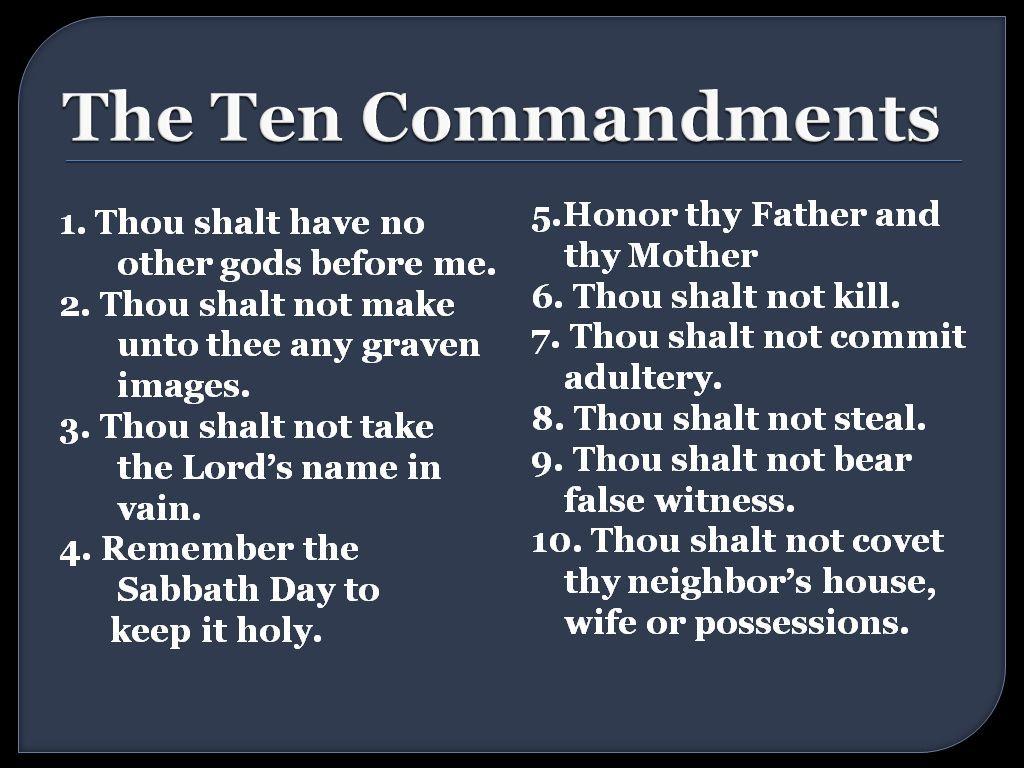
systems to display signs or posters containing the Moral Law (Ten
Commandments). (See: https://wallpapercave.com/wp/wp2492760.jpg ) Those requests present more than
one dilemma for knowledgeable Christians.
Historically,
many Christians’ initial lessons about the Bible were related in the context of
the celebrations of the birth of our Lord Jesus (“Christmas”), or His death on
the Cross followed by His Resurrection (the secular celebration of “Easter”). These annual observances were accompanied by
“gift-giving” and sometimes “special family meals”, bringing joyfulness, especially to children.
These practices continue today.
Other
Christians’ first learning of the Bible became manifest through exposure to posters
or charts / sign displaying the Ten Commandments as noted above. (See Exodus
20: 1-17). At an early stage of their learning, some were told that these
“Ten Commandments” represent God’s instructions to Christians as to how we were
to live our lives. Even so, the context
through which these Commandments were given was seldom, if ever, given. After seeing them, the readers generally would
find “nothing objectionable”, or even that they “made good sense”.
I highlighted
the term “context” because that is a very important factor that causes
the dilemma faced by knowledgeable Christians who might be asked to respond to
the question raised in the title of this post. To better explain, I’d like to provide some of
the context that a Christian should consider before being definitive in answering
the question.
Once again I
caution all Christians and other Bible students to remember and follow the
advice of the Scripture itself, and the knowledgeable scholars who came before
us. We should:
·
“rightly
divide the word of truth” (Scripture) distinguishing what was written to
the Nation of Israel under the Law of Moses (2 Timothy 2: 15); even as we…recognize
that
·
“All
Scripture is given by inspiration of God, and is profitable for doctrine, for
reproof, for correction, for instruction in righteousness…” ( 2 Timothy 3:
16-17); and further,
being mindful of the words of advice given by the early Bible Translator, Myles
Coverdale:
·
“It shall greatly help
ye to understand the Scriptures if thou mark not only what is spoken or
written, but of whom and to whom, with what words, at what time, where, to what
intent, with what circumstances, considering what goeth before and what
followeth after.” ( https://en.wikipedia.org/wiki/Myles_Coverdale )
[I know the
words above are ones I’ve used frequently, but they embrace much of what and
how Christians and other Bible students learn. Repetition really does enhance
learning!]
As we’ve previously
discussed, our Lord Jesus in His Preincarnate form as Israel’s LORD God
(Jehovah) gave the Mosaic Law, including these Ten Commandments to
Israel in Exodus Chapter 20. For
some context we need to first look at Exodus Chapter 19. There we see that Israel’s role was to serve Him
as a “kingdom of priests”…and “an holy nation”. {Verses
1-6) In those capacities Israel was
to serve to bring to the Gentile world knowledge of their God and His standards
for moral behavior. (Deuteronomy 4: 5-14; Isaiah 49: 6; Zechariah 8: 18-23) That same mission was later confirmed and relayed
by the Lord Jesus in His Incarnate form during His Earthly Ministry as He
instructed His Disciples. (Matthew 18: 18-20)…and again, following His Crucifixion,
death and Resurrection before His Ascension back to the Father. (Acts 1:
6-9).
It is
important to remember that all these instructions were given by the Lord specifically
to the Nation of Israel. It was not yet time for His message to go to the
Gentiles. (Matthew 10: 1-7) As
God, He foreknew that Israel would reject Him as their Messiah and King by influencing
the Romans to bring His death through crucifixion . After His Ascension, the Lord turned to Saul
of Tarsus (later named Paul) to be His messenger / Apostle to the Gentiles. (Acts 9: 1-16;
Romans 11: 13) (See also: https://www.gotquestions.org/apostle-to-the-Gentiles.html
I’ve given
all these points of “context” for generating a response to the title
question. They are important areas for
consideration in addressing the Christian “dilemma” as noted above. Among other revelations and instructions given
by the Ascended Lord to the Apostle Paul, one in particular stands out for this
discussion. Although
the Moral Law and the other parts of the Mosaic Law do reflect God’s standards
for man’s behavior (Psalm 19: 1-8), God knew that man would not be able
to fully obey them. (Deuteronomy 27: 26; James 2: 10; Galatians 3: 10) [For further consideration by readers of this post, I recommend your reading Romans Chapter Seven. It provides a valuable perspective of the life of believers not explained elsewhere in the Scripture.]
Through
Israel’s practical experiences in attempting to follow the Law, they were to
come to the realization that they could not be successful. After learning that
no man could achieve that full compliance, Israel would then have been in a stronger
position as “priests for the LORD in His Kingdom” to educate the Gentiles (Matthew
4: 23; 9: 1-2) They would have been
in a position to share with the Gentiles the truth…as the Bible would later inform
us.
But
Israel’s failures led the Lord to reveal to Paul the true purpose of the Law…
to clarify and make man knowledgeable of how God defines sin. (Galatians Chapter Three) Remember that the reason God gave the Moral
Law to man was clearly help us overcome the sin-nature that all mankind had
inherited from the first man Adam. Without understanding what behaviors
constituted “sin” in God’s eyes, man was destined to continue in the path that
had led to God’s having to destroy earlier generations through “Noah’s Flood” (Genesis Chapter Six). That
knowledge of “sin” would lead man to understand that the solution to overcoming
the curse of death inherited from Adam (Genesis 2: 15-17), could only be
found by the faith in believing that the Lord Jesus has already paid that death
sentence for us. (Genesis 3: 15; John 3: 14-18; Romans Chapter Five; Romans 8:
1-4)
With that
additional context, the dilemma lies in additional considerations
including:
·
Is
it feasible or even desirable to pursue sharing or teaching the Ten
Commandments if the primary objective is to share the Gospel of our Lord Jesus?
·
Further,
if the Law is to be taught, what are the qualifications for the person(s) who
should teach it?
·
What
input should be sought from parents and other responsible adults?
·
At
what age would young children be able to distinguish between the truths of
Christianity and what they might be taught about other religions?
·
If
the venue for such teaching were a public facility, how should Christians react
when advocates for other religions seek equal time or other resources?
Another part
of the dilemma Christians might face in addressing this issue is based on the assumption
that the parents are the ones who best know and therefore should teach their
children. However, the current situation suggests that the parents themselves
are generally not fully educated about the Ten Commandments or many other messages
of the Bible.
Perhaps it
would be better for all parties concerned if this issue had not been raised, or
now that it has been raised, maybe it should be ignored.
As a rhetorical
question, how would you answer the question raised in the title of this post?
Dr. W. A.
(Bill) Robinson


No comments:
Post a Comment